

Chapter 5 Verse 27-28
Karm Sanyās Yog
स्पर्शान्कृत्वा बहिर्बाह्यांश्चक्षुश्चैवान्तरे भ्रुवोः। प्राणापानौ समौ कृत्वा नासाभ्यन्तरचारिणौ।।5.27।। यतेन्द्रियमनोबुद्धिर्मुनिर्मोक्षपरायणः। विगतेच्छाभयक्रोधो यः सदा मुक्त एव सः।।5.28।।
sparśhān kṛitvā bahir bāhyānśh chakṣhuśh chaivāntare bhruvoḥ prāṇāpānau samau kṛitvā nāsābhyantara-chāriṇau yatendriya-mano-buddhir munir mokṣha-parāyaṇaḥ vigatechchhā-bhaya-krodho yaḥ sadā mukta eva saḥ yatendriya-mano-buddhir munir mokṣa-parāyaṇaḥ vigatecchā-bhaya-krodho yaḥ sadā mukta eva saḥ
Word Meanings
| sparśhān | contacts (through senses) |
| kṛitvā | keeping |
| bahiḥ | outside |
| bāhyān | external |
| chakṣhuḥ | eyes |
| cha | and |
| eva | certainly |
| antare | between |
| bhruvoḥ | of the eyebrows |
| prāṇa-apānau | the outgoing and incoming breaths |
| samau | equal |
| kṛitvā | keeping |
| nāsa-abhyantara | within the nostrils |
| chāriṇau | moving |
| yata | controlled |
| indriya | senses |
| manaḥ | mind |
| buddhiḥ | intellect |
| muniḥ | the sage |
| mokṣha | liberation |
| parāyaṇaḥ | dedicated |
| vigata | free |
| ichchhā | desires |
| bhaya | fear |
| krodhaḥ | anger |
| yaḥ | who |
| sadā | always |
| muktaḥ | liberated |
| eva | certainly |
| saḥ | that person yata |
| indriya | senses |
| manaḥ | mind |
| buddhiḥ | intelligence |
| muniḥ | the transcendentalist |
| mokṣa | liberation |
| parāyaṇaḥ | being so destined |
| vigata | discarded |
| icchā | wishes |
| bhaya | fear |
| krodhaḥ | anger |
| yaḥ | one who |
| sadā | always |
| muktaḥ | liberated |
| eva | certainly |
| saḥ | he is |
Translation
Shutting out all external contacts and fixing the gaze between the eyebrows, realizing the outgoing and incoming breaths moving within the nostrils. With the senses, mind, and intellect ever controlled, having liberation as their supreme goal, free from desire, fear, and anger, the sage is truly liberated forever.
Philosophical Significance
Core Meaning
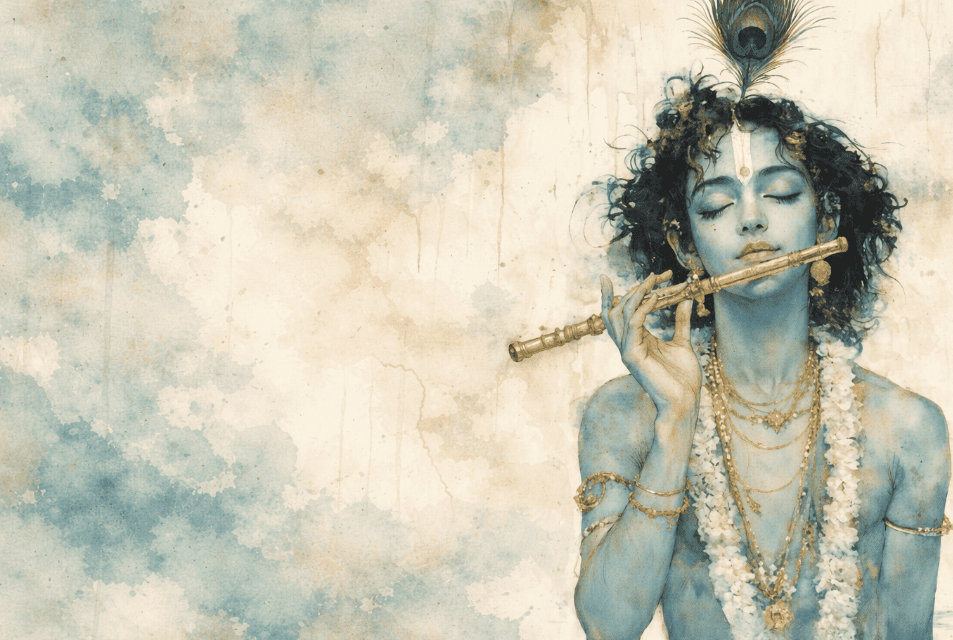
The verse teaches turning attention inward. By withdrawing from constant sensory contacts, fixing a calm gaze between the eyebrows, and gently watching the in-breath and out-breath, the mind finds a steady center.
When senses, mind, and intellect are kept steady and directed toward inner freedom, inner urges like desire, fear, and anger lose their power. True liberation is not only leaving the world, but being free inside while living in it.
This freedom comes from steady practice: simple inward attention, clear intention, and calm response instead of automatic reaction.
Life Application
- Pause for a minute or two several times a day: soften your gaze, follow your breath in and out, and let the mind settle.
- When desire, fear, or anger arise, stop and take three calm breaths before speaking or acting. Notice the feeling without feeding it.
- Reduce constant sensory input (phone, news, noise) for short periods to strengthen inner stillness and clearer choices.
Reflection Question
What small pause can you add today to notice your breath and slow your reaction?