

Chapter 1 Verse 15
Arjun Viṣhād Yog
पाञ्चजन्यं हृषीकेशो देवदत्तं धनंजयः। पौण्ड्रं दध्मौ महाशङ्खं भीमकर्मा वृकोदरः।।1.15।।
pāñchajanyaṁ hṛiṣhīkeśho devadattaṁ dhanañjayaḥ pauṇḍraṁ dadhmau mahā-śhaṅkhaṁ bhīma-karmā vṛikodaraḥ
Word Meanings
| pāñchajanyam | the conch shell named Panchajanya |
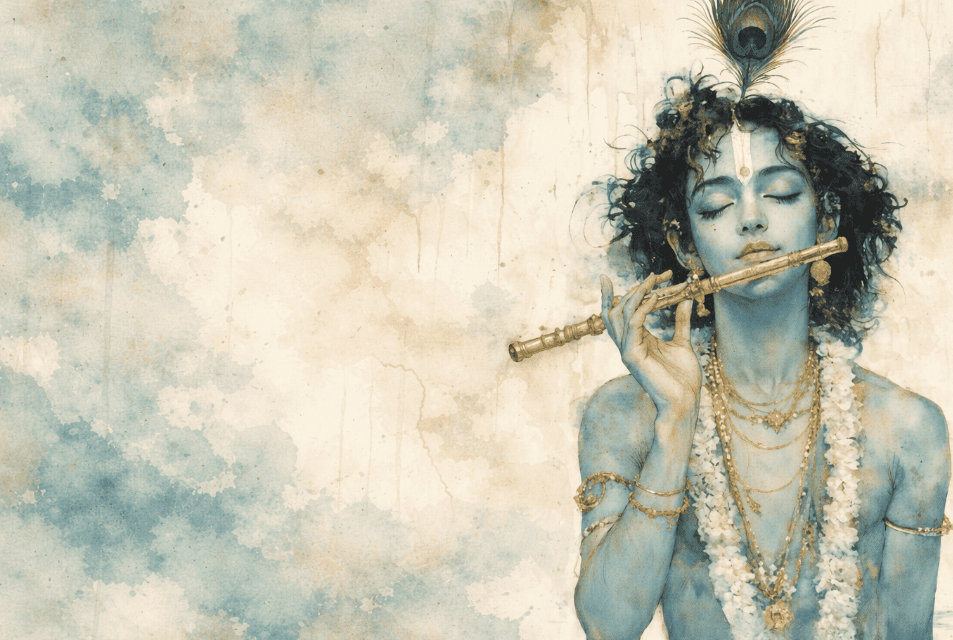
| hṛiṣhīka-īśhaḥ | Shree Krishna, the Lord of the mind and senses |
| devadattam | the conch shell named Devadutta |
| dhanam-jayaḥ | Arjun, the winner of wealth |
| pauṇḍram | the conch named Paundra |
| dadhmau | blew |
| mahā-śhaṅkham | mighty conch |
| bhīma-karmā | one who performs herculean tasks |
| vṛika-udaraḥ | Bheem, the voracious eater |
Translation
Hrishikesha blew the Panchajanya, Arjuna blew the Devadatta, and Bhima, the wolf-bellied doer of terrible deeds, blew the great conch Paundra.
Philosophical Significance
Core Meaning
The conches blown by Krishna, Arjuna, and Bhima are more than battle signals. They stand for an inner awakening — a call to duty, clear intention, and readiness for the work ahead.
Each figure represents a needed quality: Krishna as calm inner guide, Arjuna as the conscious chooser, and Bhima as the strength that carries out tasks. Together they show that right action needs guidance, decision, and power in balance.
The sound of the conch reminds us to begin any important work with clarity, courage, and a sense of higher purpose rather than anger or confusion.
Life Application
- Before starting a difficult task, pause and set a clear intention: ask what the right aim is and why you do it.
- Align your mind (guidance), your choice (will), and your effort (strength) so actions are steady and focused.
- Act courageously but detach from results; let values, not fear or pride, drive your work.
Reflection Question
Which inner voice — guidance, choice, or strength — needs your attention right now?