

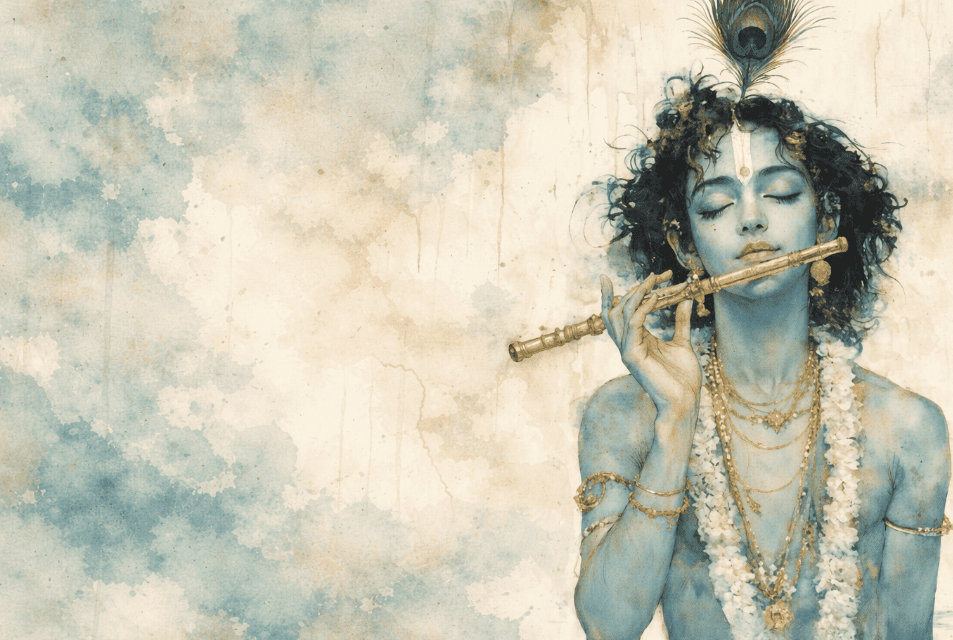
Kṣhetra Kṣhetrajña Vibhāg Yog
Distinction Between Field and Knower
Chapter 13 explains the difference between the field (kṣhetra) and the knower of the field (kṣhetrajña). The field is the body, mind, senses, and the whole physical world; the knower is the soul or pure consciousness that observes them.
Krishna teaches that true knowledge is seeing this difference clearly. When we know the knower, we rise above confusion, attachment, and the limits of the body and mind.
The chapter lists qualities of the knower and of wise people: humility, steady mind, self-control, and lack of ego. It also points to the supreme reality (Brahman) as the source and goal of knowledge.
By practicing discrimination and devotion, one gains steady wisdom and freedom from fear and sorrow. Knowledge leads to unity with the whole, not mere book learning.
Key Teachings
- Distinguish between the body-mind (field) and the self that knows (knower).
- True wisdom comes from direct discrimination, not just information.
- Wise living shows humility, self-control, simplicity, and steady focus.
- Knowing the supreme reality removes fear and brings lasting peace.
Life Application
- Practice self-observation: notice thoughts and feelings as events, while you stay as the quiet witness.
- Do your duties without clinging to results, and cultivate humility and self-control.
- Study and reflect on inner experience, aiming to live from awareness rather than from ego.
Reflection Question
Am I living from the watching self, or am I lost in my thoughts, emotions, and roles?
Verses in this Chapter
Arjuna said, "I wish to learn about Nature and the Spirit, the field and the knower of the field, knowledge and that which ought to be known, O Kesava."
The Blessed Lord said, "O Arjuna, this body is called the field; he who knows it is called the knower of the field by those who know them."
Do thou also know Me as the knower of the field in all fields, O Arjuna. Knowledge of both the field and the knower of the field is considered by Me to be the knowledge.
Hear from Me in brief what the field is, of what nature it is, what its modifications are, whence it is, who He is, and what His powers are.
Sages have sung in many ways, with various distinctive chants and also with suggestive words indicative of the Absolute, full of reasoning and decisive.
The great elements, egoism, intellect, and also the Unmanifested Nature, the ten senses, and one mind, and the five objects of the senses.
Desire, hatred, pleasure, pain, the aggregate (body), intelligence, and fortitude—the field has thus been briefly described with its modifications.
Humility, unpretentiousness, non-injury, forgiveness, uprightness, service to the teacher, purity, steadfastness, and self-control. Indifference to the objects of the senses and also absence of egoism; perceiving the evil in birth, death, old age, sickness, and pain. Non-attachment, non-identification of the Self with son, wife, home, and the rest, and constant even-mindedness in the face of the attainment of both desirable and undesirable. Unswerving devotion to Me through the Yoga of non-separation, resorting to solitary places, and a distaste for the company of people. Constancy in Self-knowledge, the perception of the end of true knowledge—this is declared to be knowledge, and what is opposed to it is ignorance.
I will declare that which is to be known, knowing which one attains immortality; the beginningless Supreme Brahman, which is neither being nor non-being.
With hands and feet everywhere, with eyes, heads, and mouths everywhere, with ears everywhere, He exists in the worlds, enveloping all.
Shining by the functions of all the senses, yet without being attached to them; unattached, yet supporting all; devoid of qualities, yet the experiencer of them.
It is within and without all beings, both the unmoving and the moving; It is subtle and unknowable, and It is near and far away.
Undivided yet, It exists as if divided in beings; It is to be known as the supporter of beings; It devours and It generates.
That Light of all lights is said to be beyond darkness: knowledge, the knowable, and the goal of knowledge, seated in the hearts of all.
Thus, the field, as well as knowledge and the knowable, have been briefly stated. My devotee, knowing this, enters into My being.
Know that Nature (matter) and the Spirit are both beginningless, and know also that all modifications and qualities are born from Nature.
In the production of the effect and the cause, Nature (matter) is said to be the cause; in the experience of pleasure and pain, the soul is said to be the one responsible.
The soul seated in Nature experiences the qualities born of Nature; attachment to the qualities is the cause of its birth in good and evil wombs.
The Supreme Soul in this body is also called the observer, the permitter, the sustainer, the enjoyer, the great Lord, and the Supreme Self.
He who thus knows the Spirit and Matter together with their qualities, in whatever condition he may be, he is not reborn.
Some behold the Self within themselves through meditation, others through the Yoga of knowledge, and still others through the Yoga of action.
Others, too, who do not know thus, worship, having heard of It from others; they, too, cross beyond death, regarding what they have heard as the supreme refuge.
Wherever a being is born, whether unmoving or moving, know thou, O best of the Bharatas (Arjuna), that it is from the union of the field and its knower.
He who sees the Supreme Lord existing truly in all beings, the imperishable within the perishable, sees indeed.
For he who truly sees the same Lord dwelling everywhere does not destroy the Self by the self; rather, he attains the highest goal.
He sees, who sees that all actions are performed solely by Nature and that the Self is without action.
When a person sees all beings as resting in the One and emanating from the One alone, they then become Brahman.
Being without beginning, devoid of any qualities, the Supreme Self, imperishable, though dwelling in the body, O Arjuna, neither acts nor is tainted.
As the all-pervading ether is not tainted, due to its subtlety, so the Self seated everywhere in the body is not tainted either.
Just as the one sun illuminates the entire world, so too does the Lord of the field (Supreme Self) illuminate the entire field, O Arjuna.
They who, by the eye of knowledge, perceive the distinction between the field and its knower, as well as the liberation from the Nature of being, go to the Supreme.